| CROCHET FLOWER SYSTEM | Version 180526
| ||||||
| INTRODUCTION |
No crochet flower is ever going to look the same as a real flower, but crochet flowers do have an inherent beauty in their own right. Crochet flowers can therefore be designed and created without necessarily trying to copy nature. Flowers can be constructed from basic sections. These are: Centre, Petals, Leaves, Stem, Receptacle, Sepals 2D flowers only need a centre and some petals 3D flowers will need all of the 6 sections |
||||||
| EXAMPLES 2D Flowers |
Petal 1-1, Centre 1-1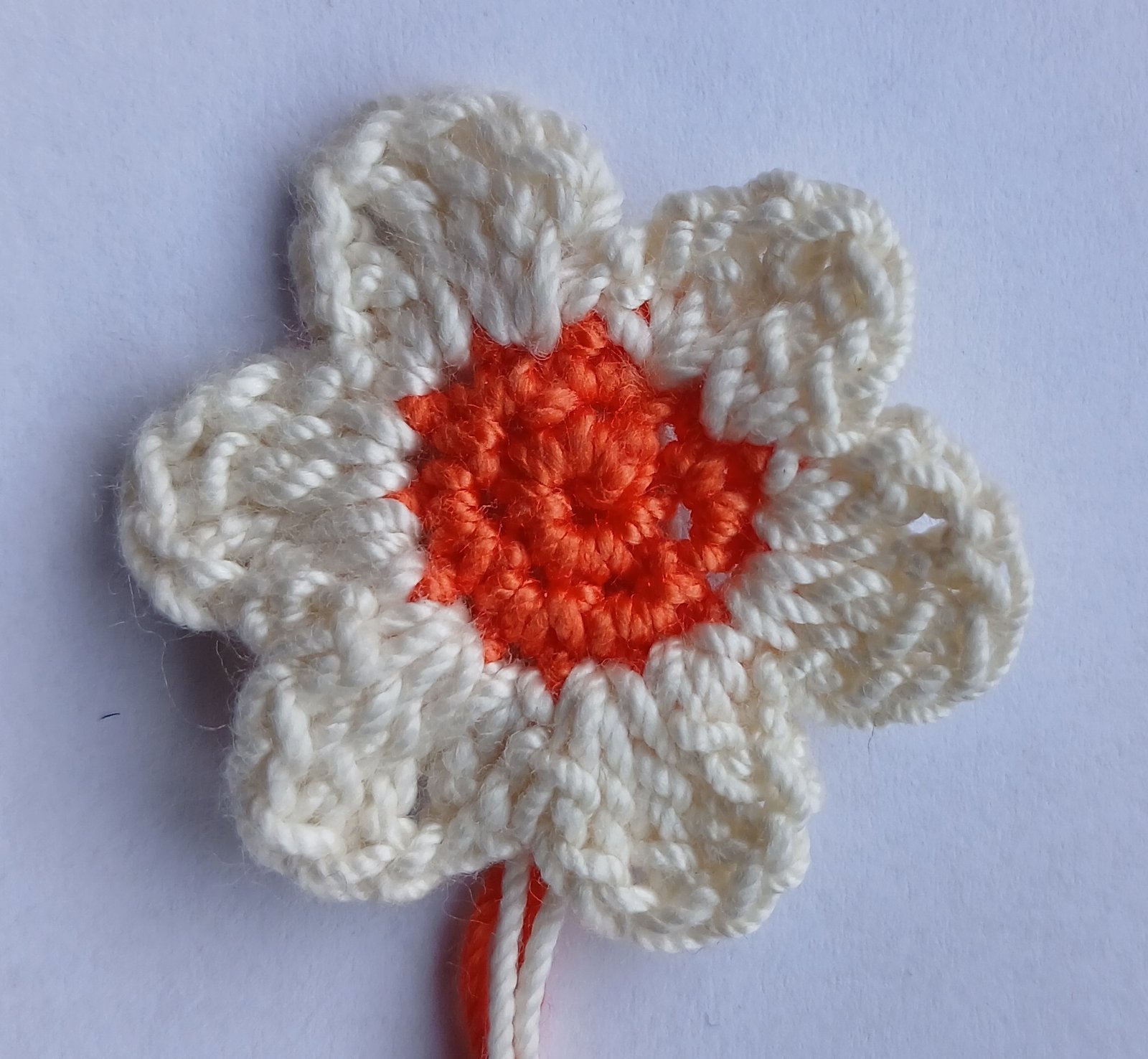 |
Petal 1-1, Centre 1-2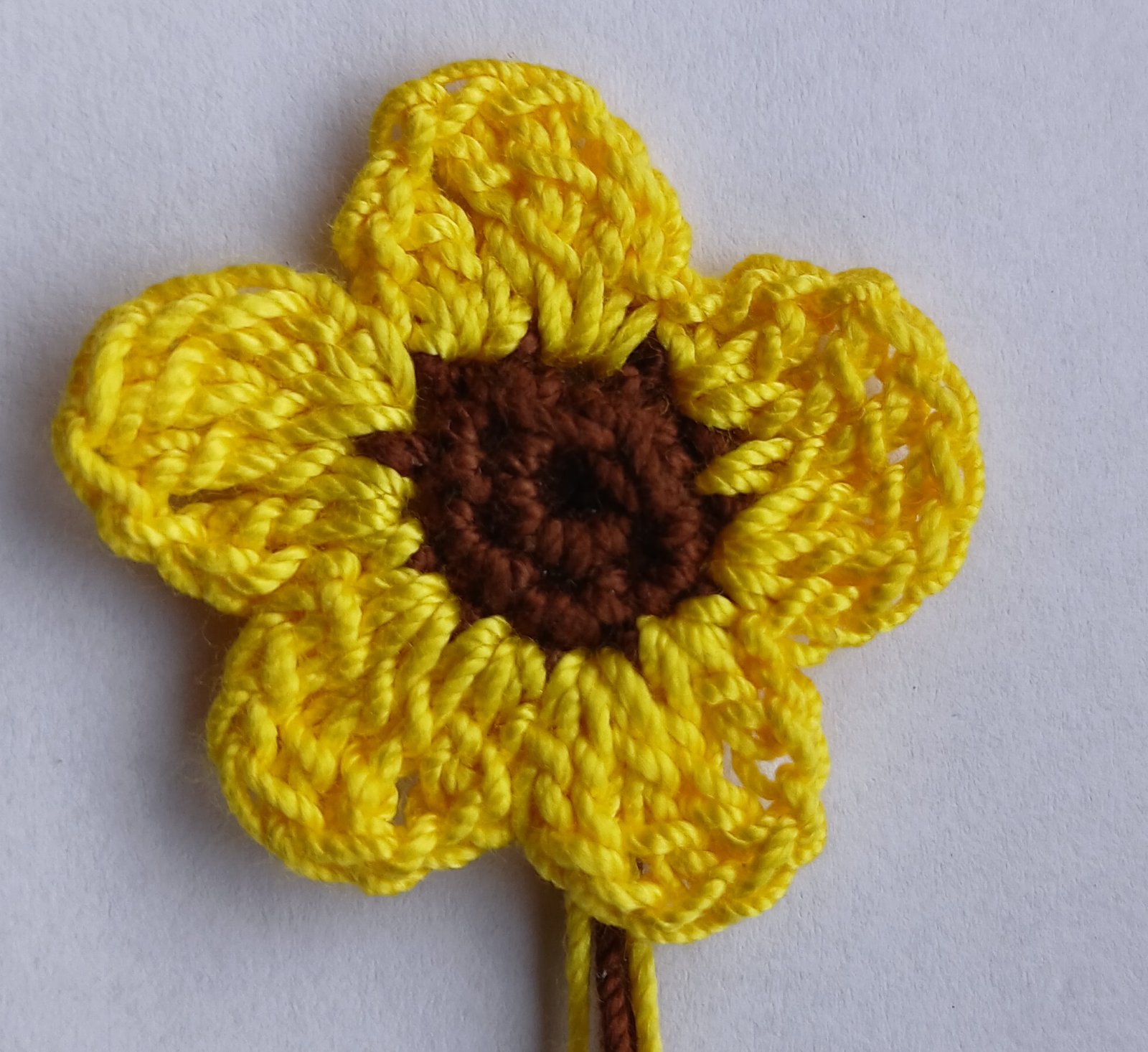 |
Petal 1-1, Centre 1-3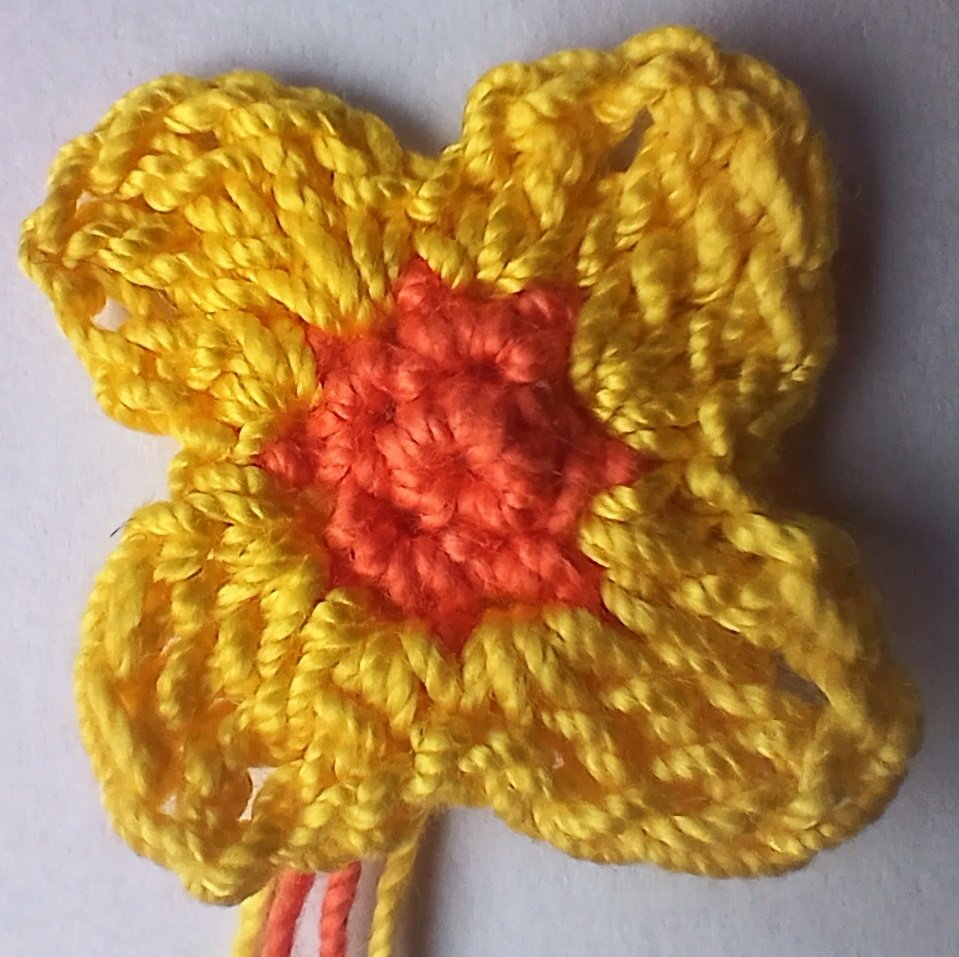 |
Petal 2-1, Centre 1-1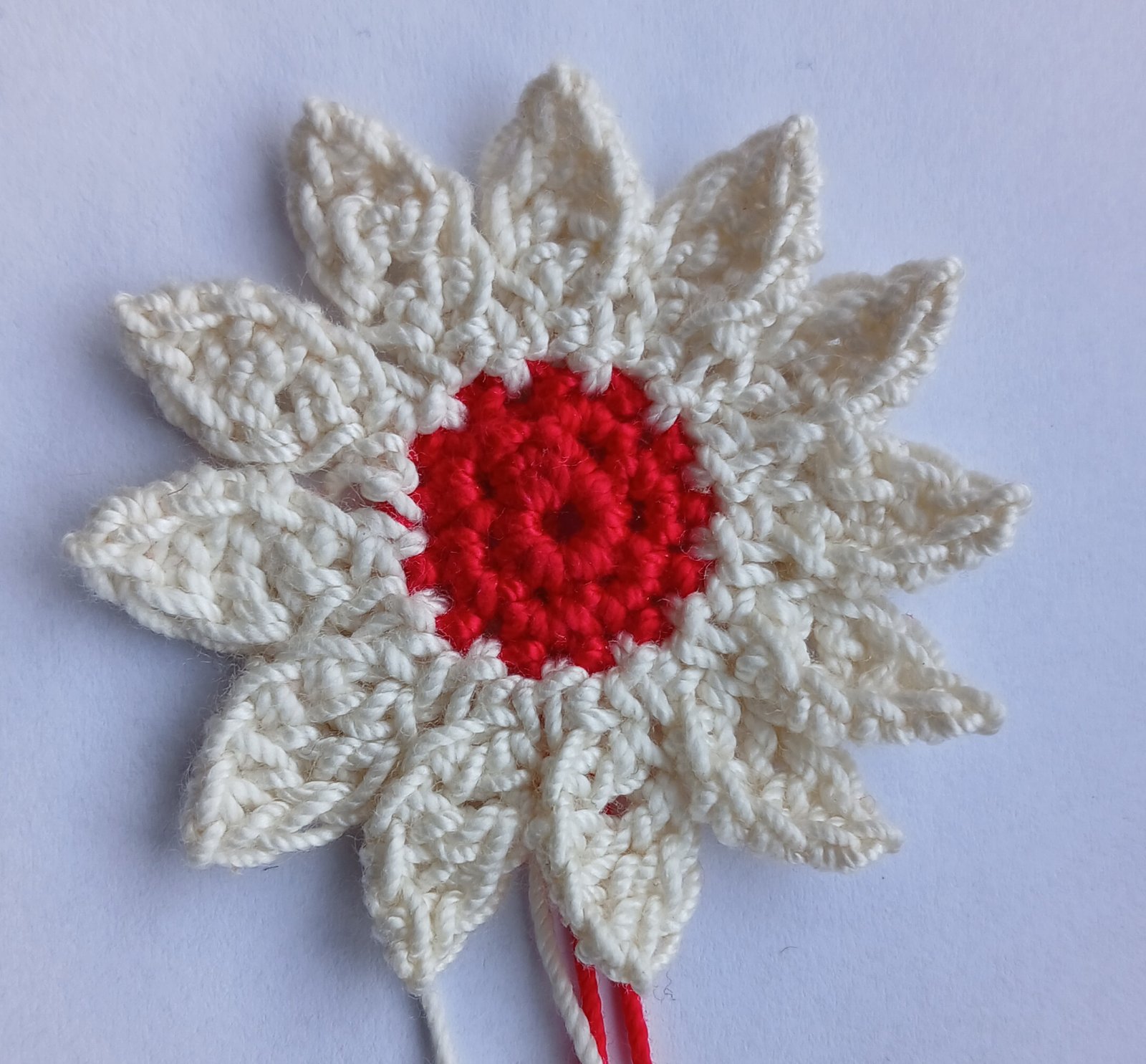 |
Petal 2-2, Centre 1-1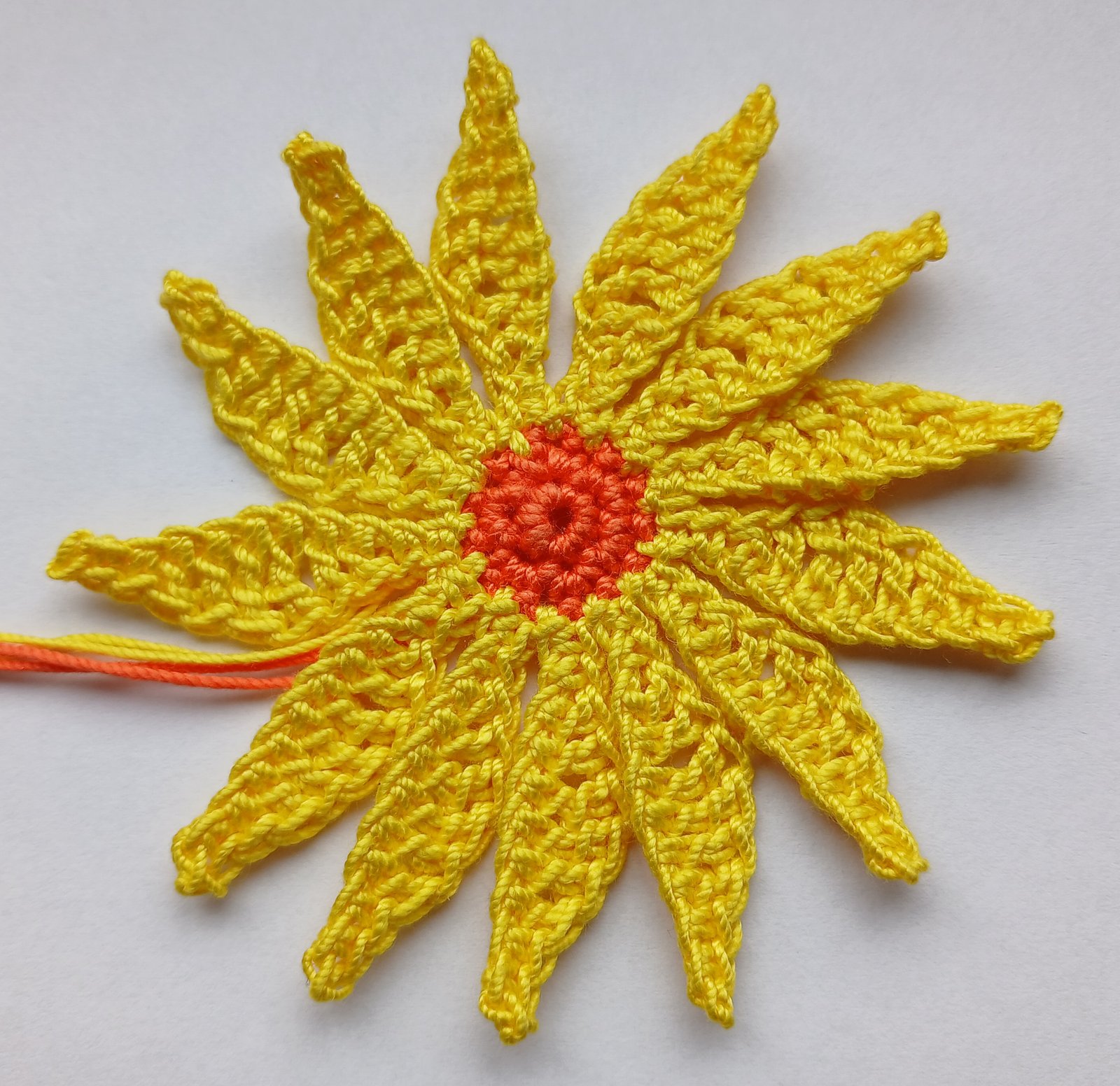 |
||
| EXAMPLES 3D Flowers |
3D 1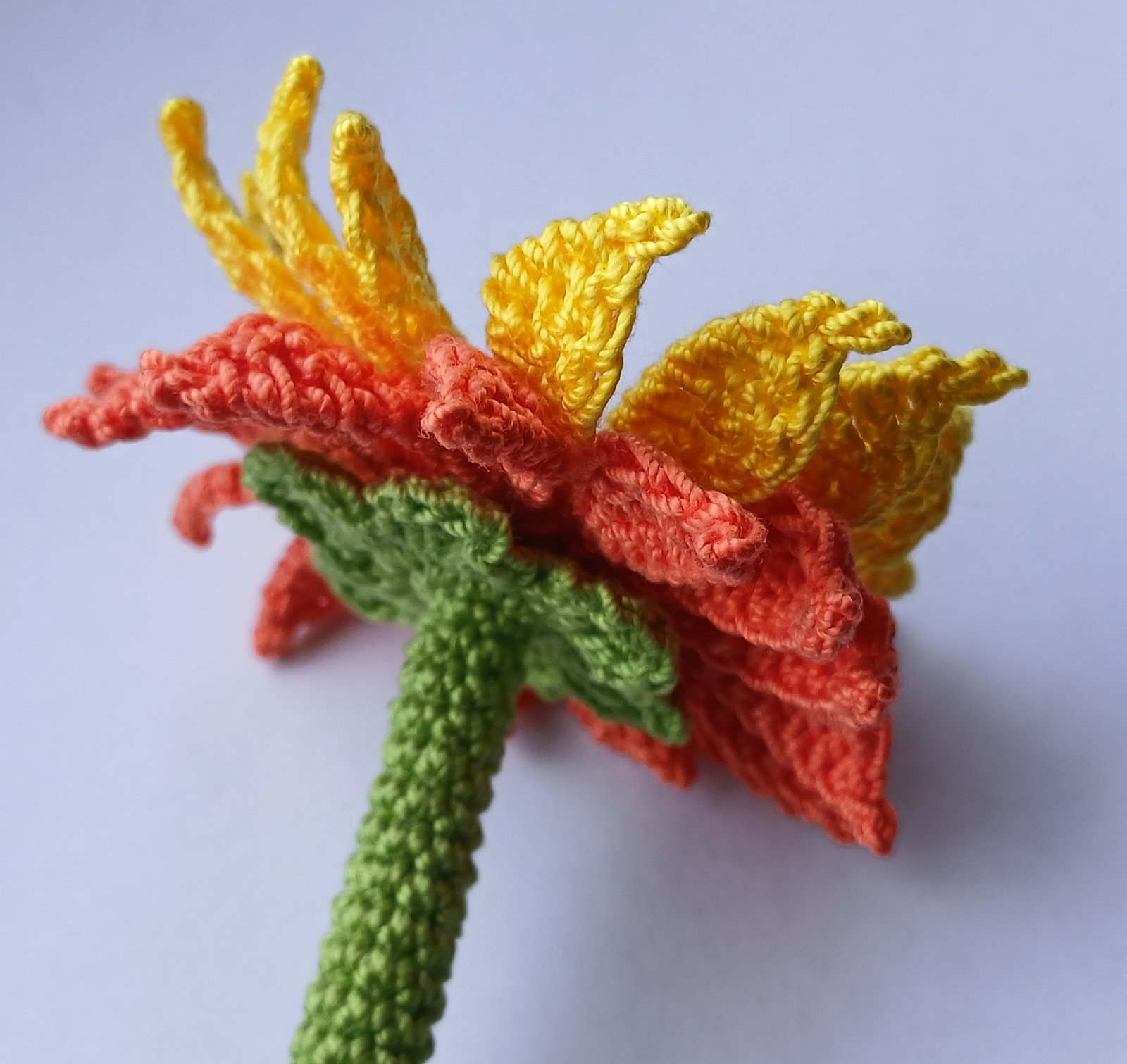 |
3D 1a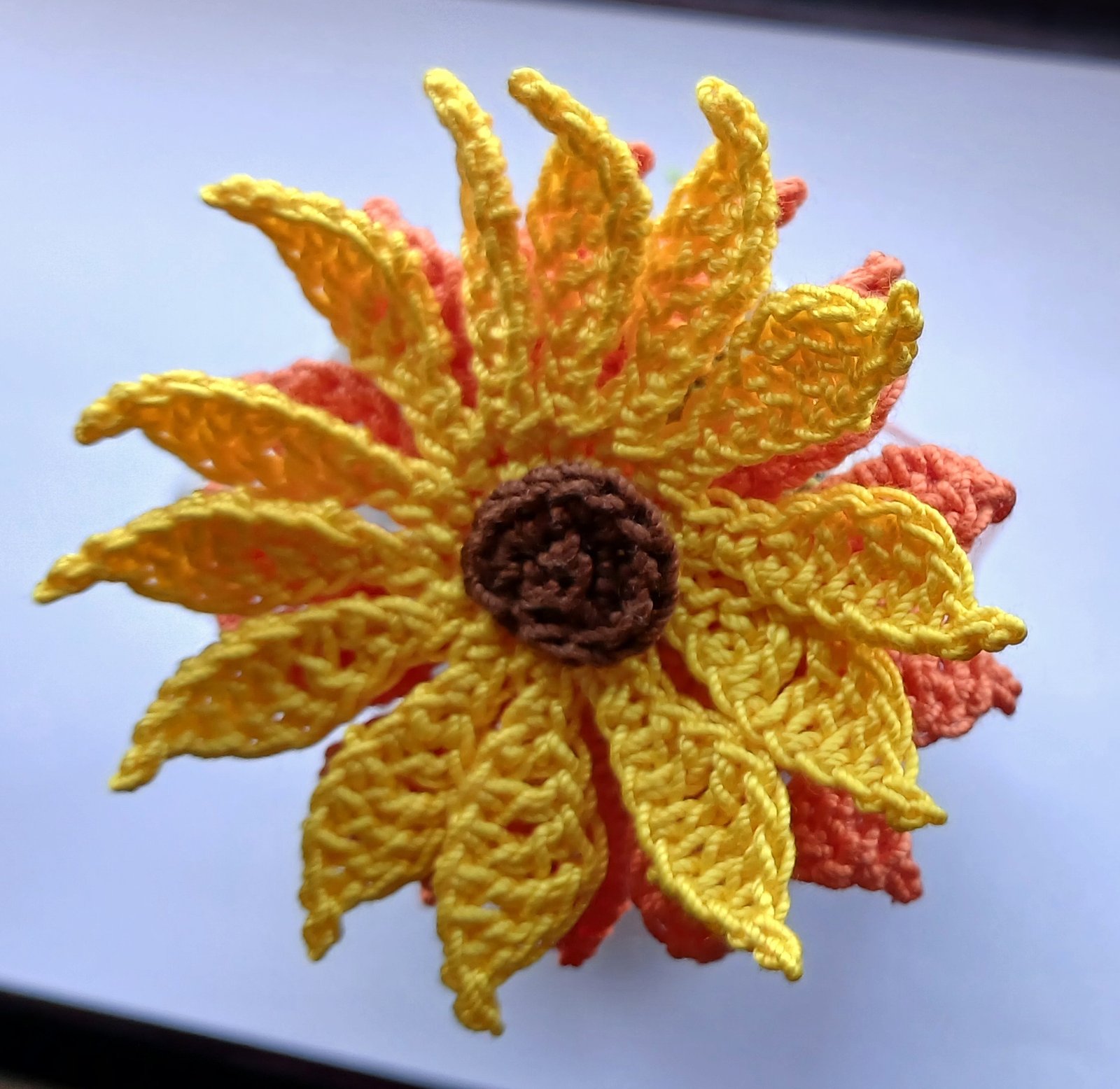 |
|||||
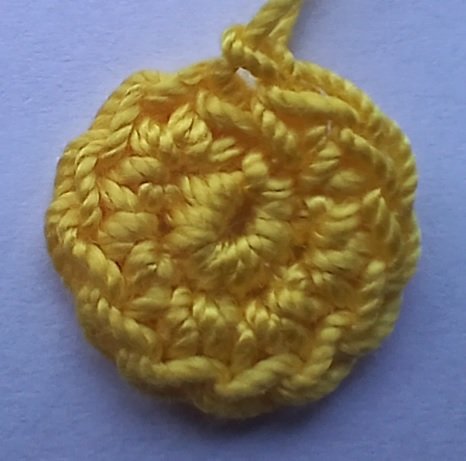
| CENTRES | Centre 1-1 • Row 1. MR with 6 dc, close with ss • Row 2. 1ch, (2dc into next st) × 6, close with a ss, cast off. (12 st) Centre 1 variations and notes. |
||||||
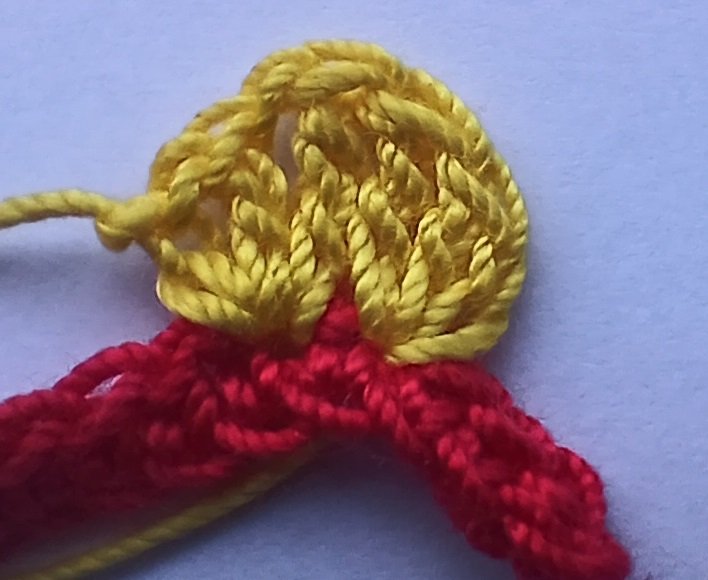
| PETALS | Petal 1 - 2st wide Join in yarn with a dc, 1ch, 1tr into same st, 1ch, 1dtr into same st, 1dtr into next st, 1ch, 1tr into same st, 1ch, 1dc into same st. Repeat for each petal. |
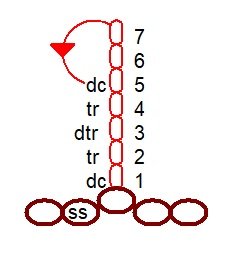
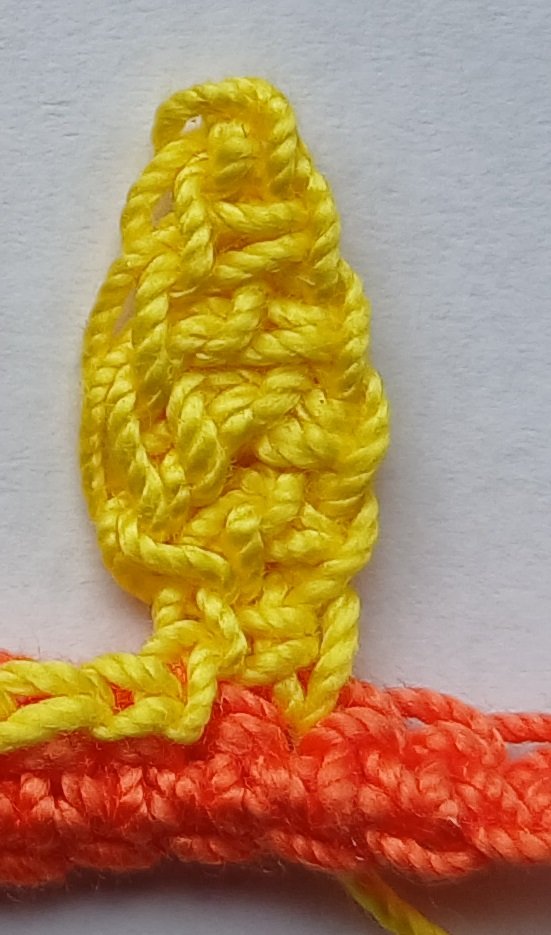
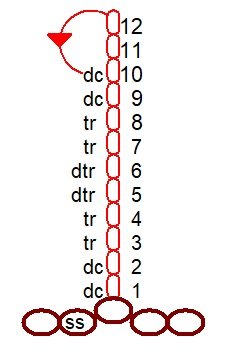
Petal 2 - 2st wide Join in yarn with a ch, 7ch, 1dc into 5th ch, 1tr into 4th ch, 1dtr into 3th ch, 1tr into 2nd ch, 1dc into 1st ch, 1ss into next st. Repeat for each petal Petal 2 variations and notes |
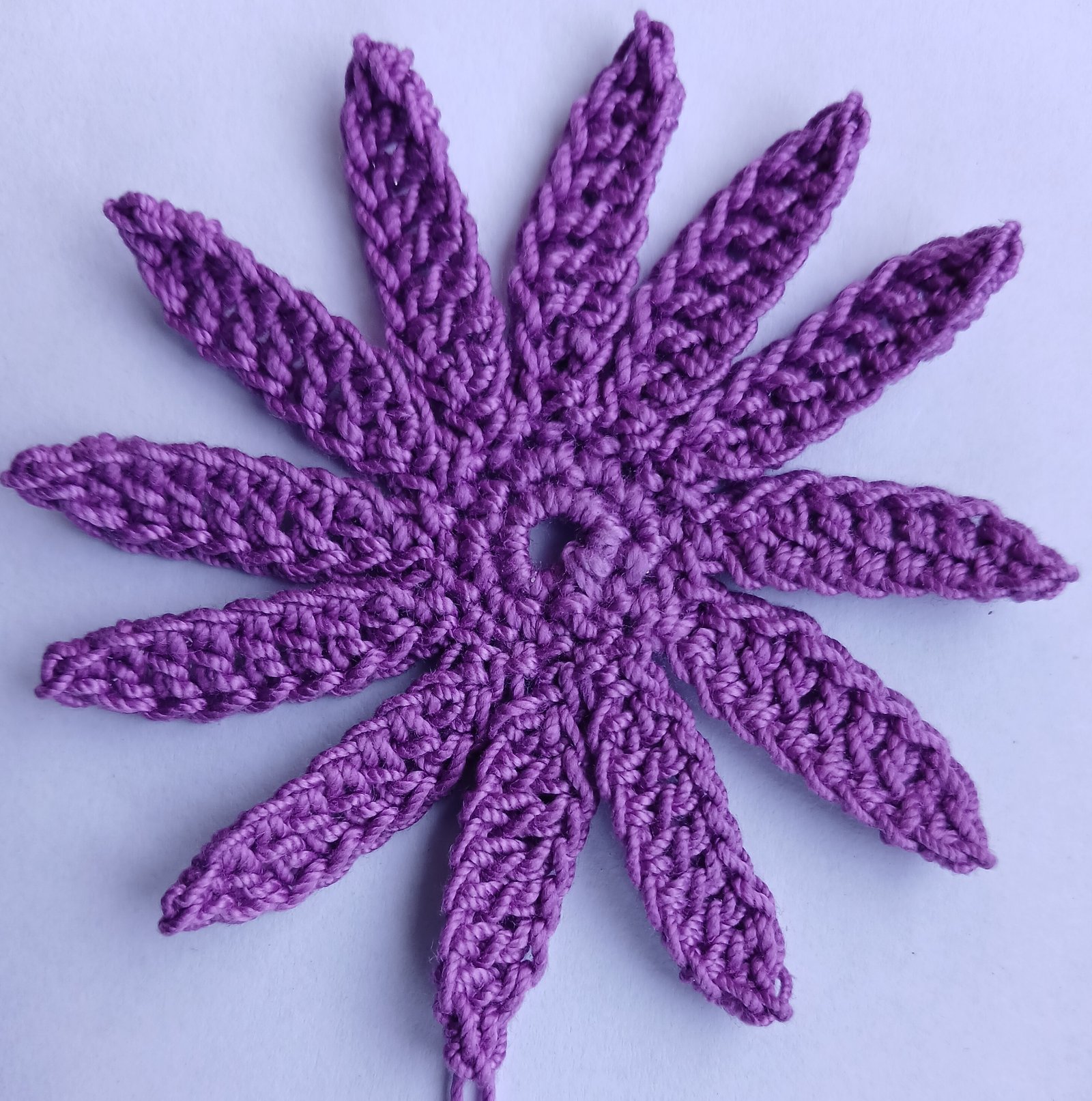
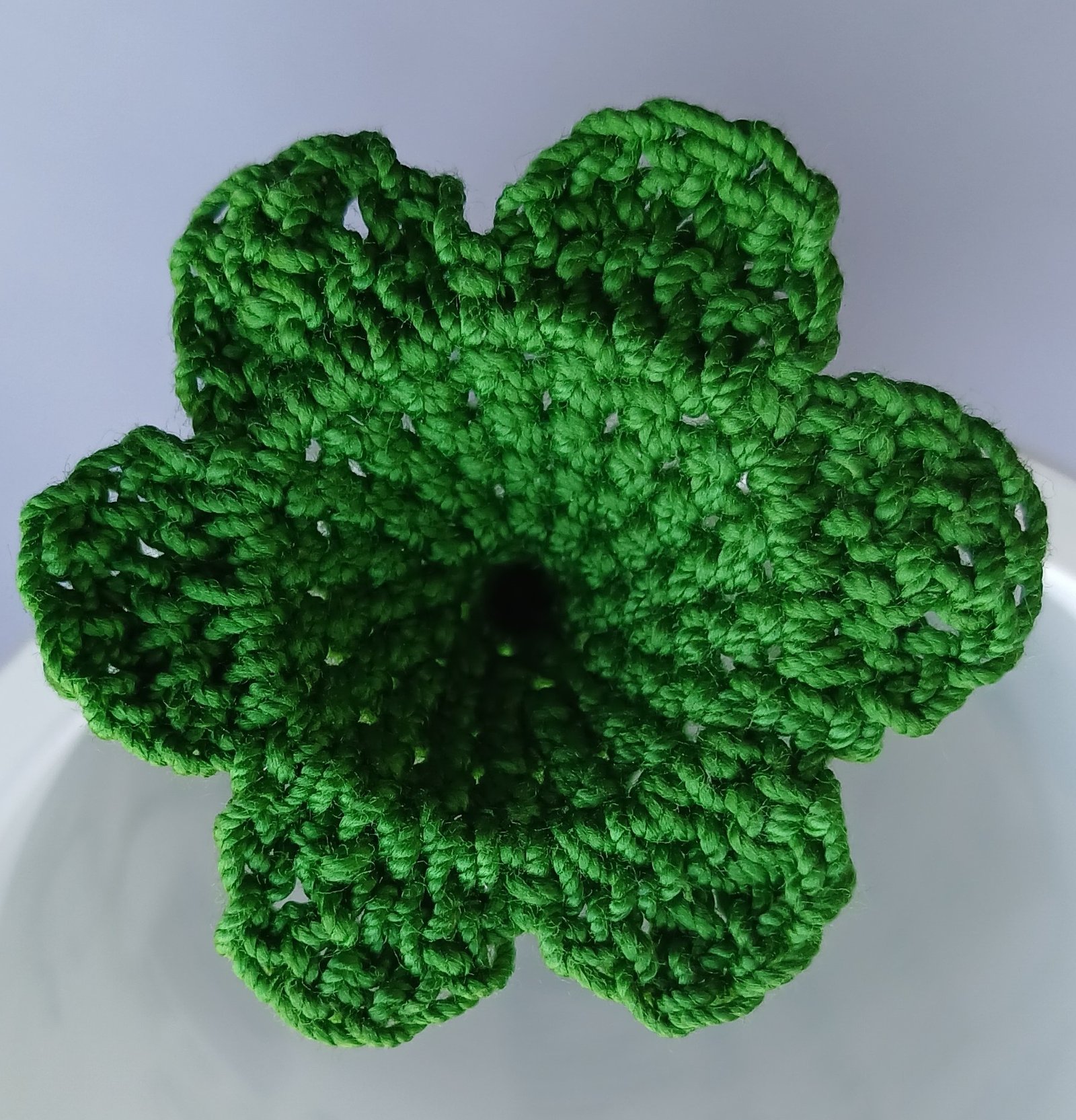
Petal Ring 1 • Row 1. MR with 8 dc, close with ss • Row 2 1ch, (2dc into next st, 1dc into next st) × 4, close with a ss (12 st) • Row 3. 10ch, 1dc into 8th ch, (1tr into next ch) × 6, 1dc into 1st ch, 1ss into next st. Repeat for each petal until ring is complete Petal Ring 1 variations and notes |
||||
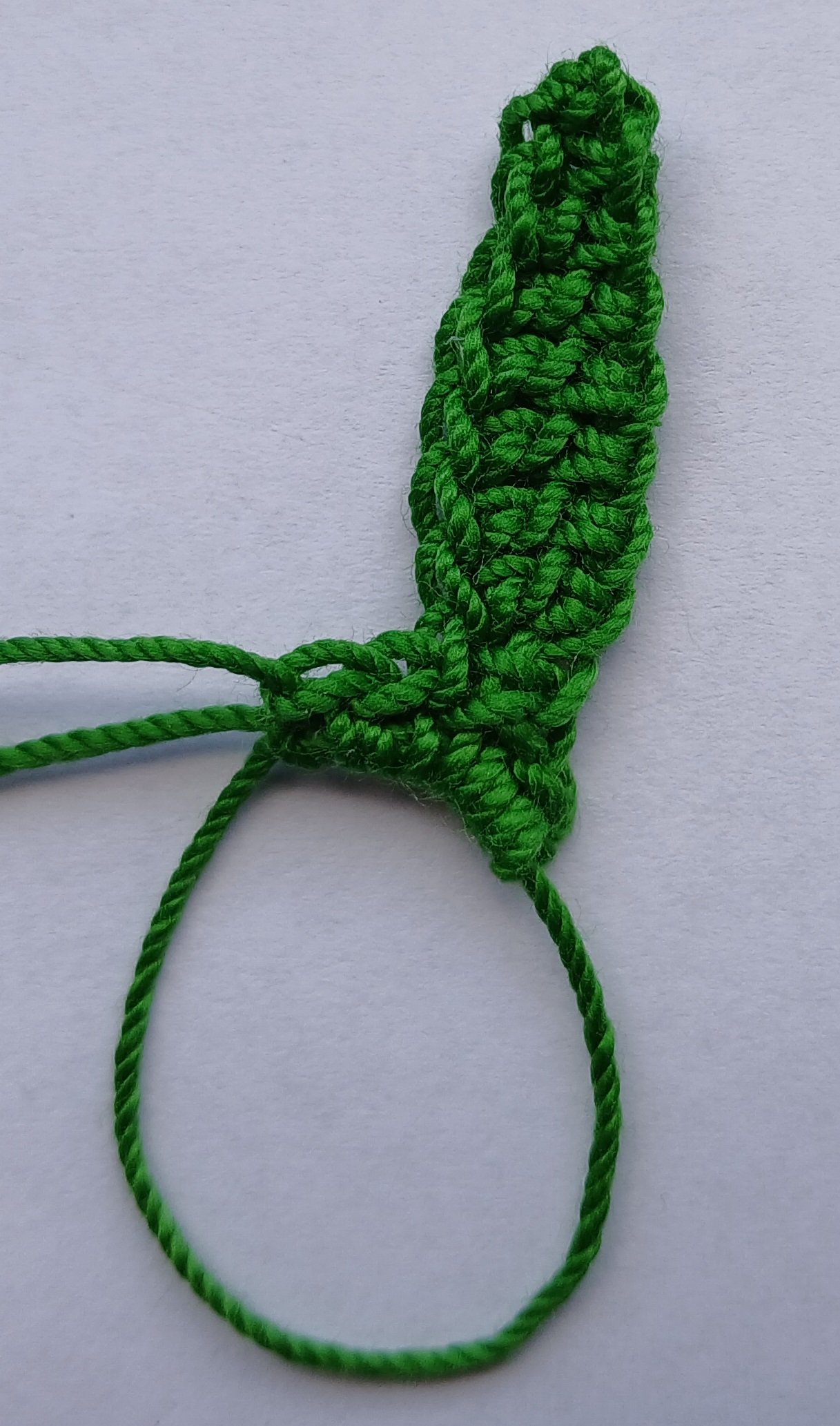
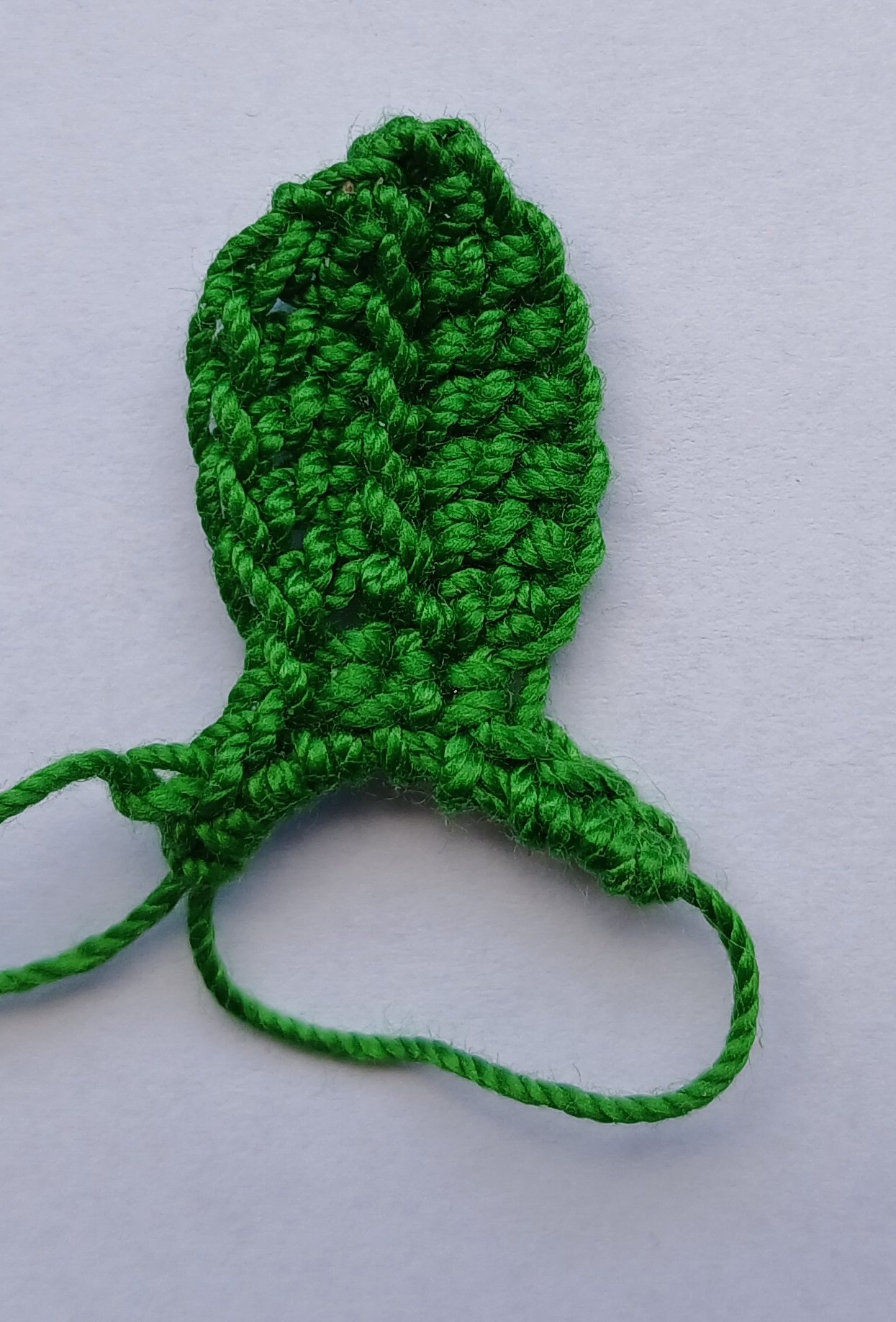
| LEAVES The MR enables the leaf to be fitted onto the stem, and then tightened and sewn into the stem |
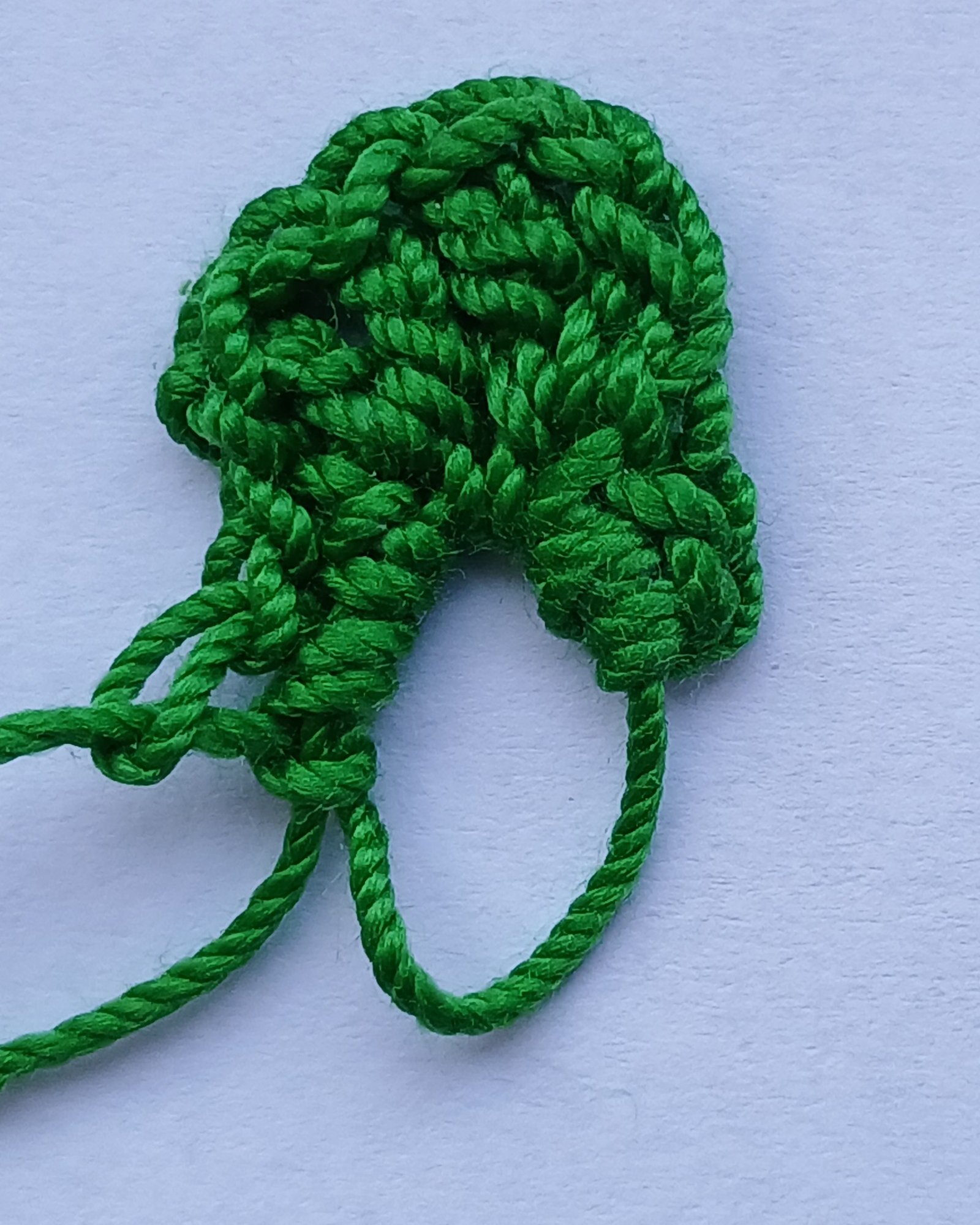
Leaf 1 - 2st wide This is the same style as Petal 1 • Make a MR • Make two dc into MR • Make 1ch, 1tr into same st, 1ch, 1dtr into same st, 1dtr into MR, 1ch, 1tr into same st, 1ch, 1dc into same st • Cast off |
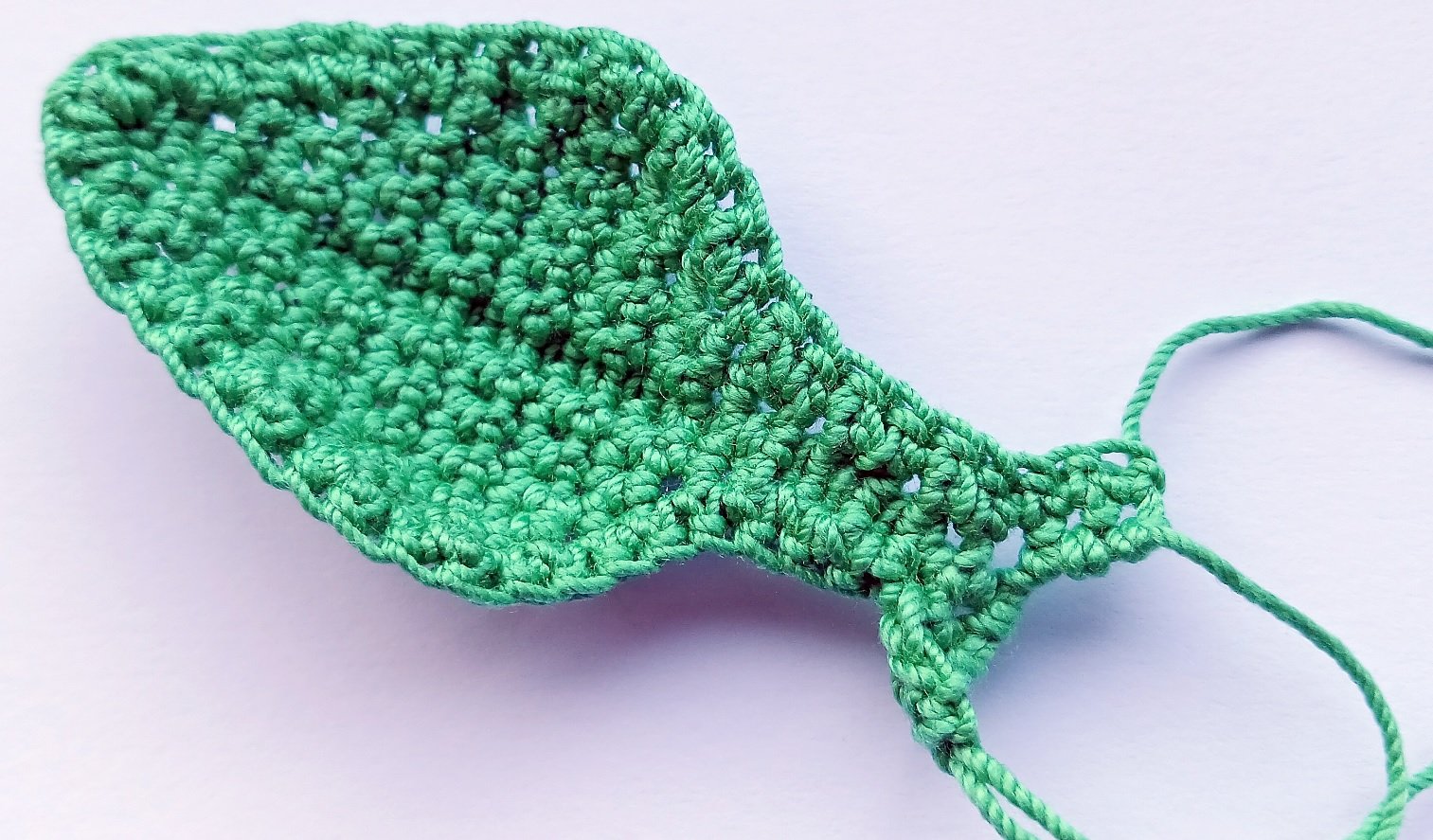
Leaf 2 - 2st wide This is the same style as Petal 2 • Make a MR • Make two dc into MR • Make 10ch, 1dc into 8th ch, 1tr into ch 7-2, 1dc into 1st ch, 2dc into MR. • Cast off All variations for Petal 2 are valid for Leaf 2. Leaf 2 variations and notes |
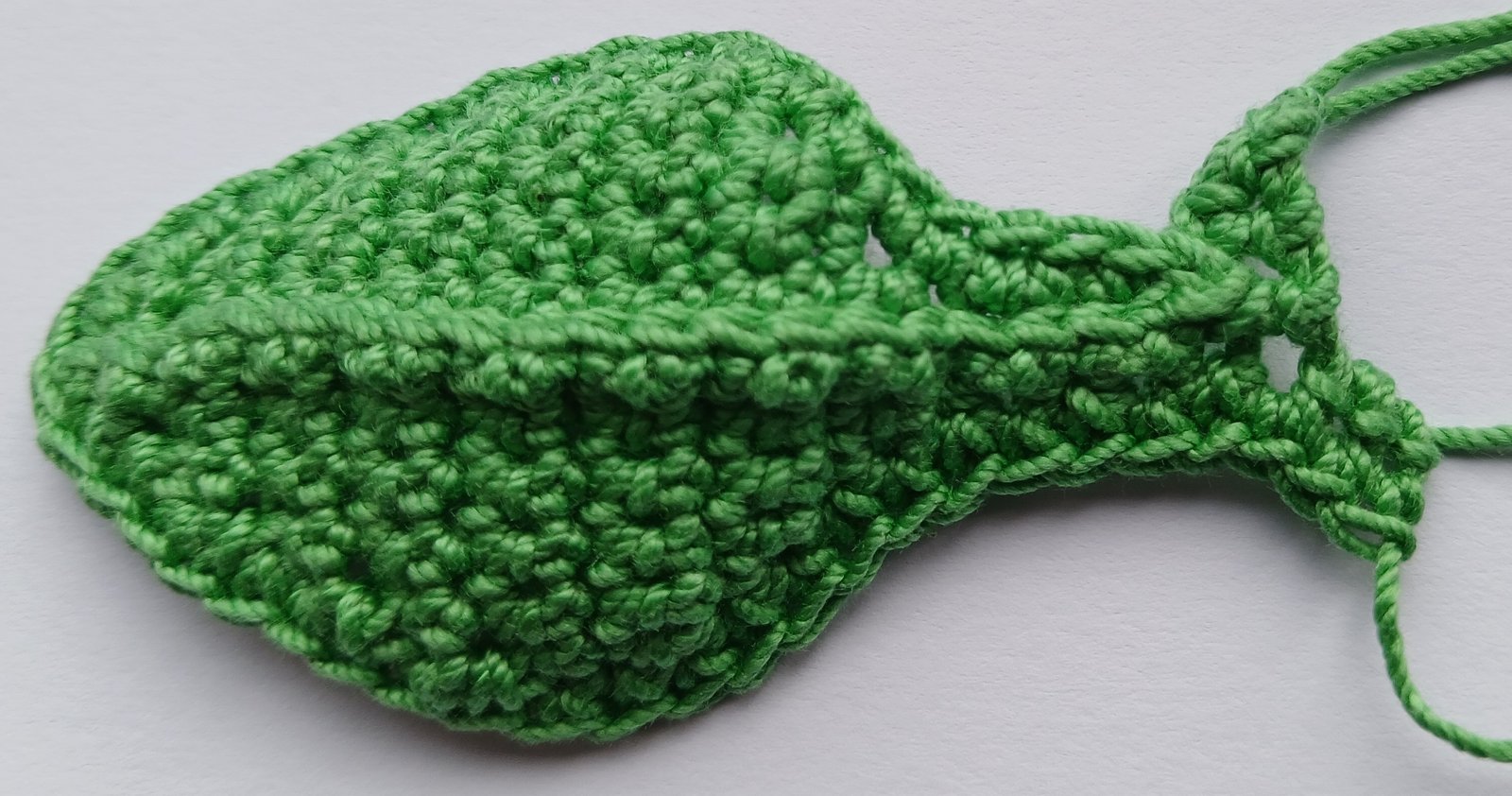
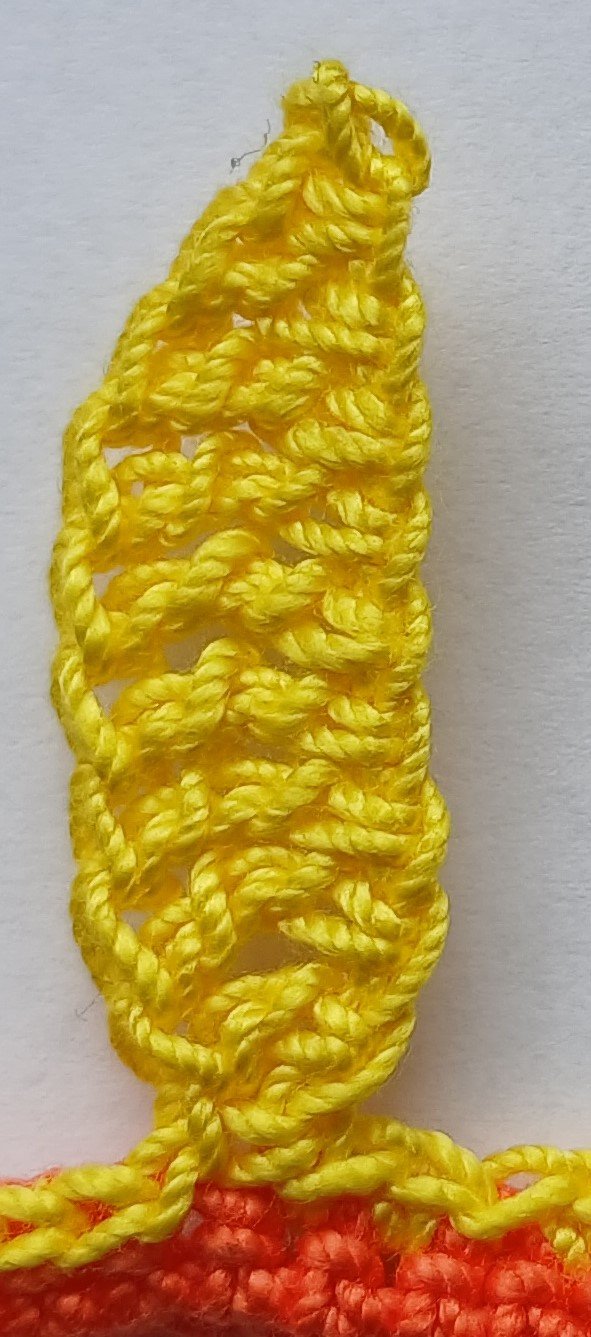
Leaf 3 - 3st wide • Make a MR • Make two dc into MR • Make 10ch • Row 1 1dc into 8th ch, 1tr into ch 7 to 2, 1dc into 1st ch, 1ss into next st of base • Row 2 1ss into each stitch to top of leaf (Moves yarn back to top of leaf) • Row3 1dc, 6tr, 1dc, 3dc into MR • Cast off Leaf 3 variations and notes |
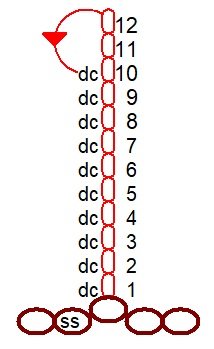
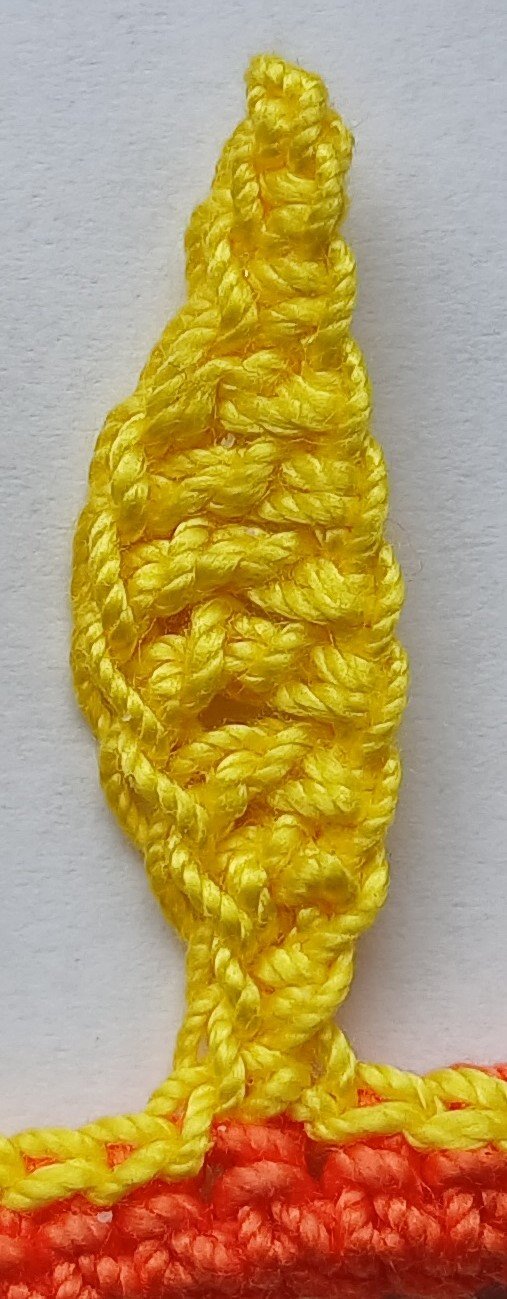
Leaf 4 - 2st wide This is a generic large leaf which can be readily modified The only criteria is that there should be an even number of stitches so that the midrib can be central Leaf 4 notes and variations |
|||
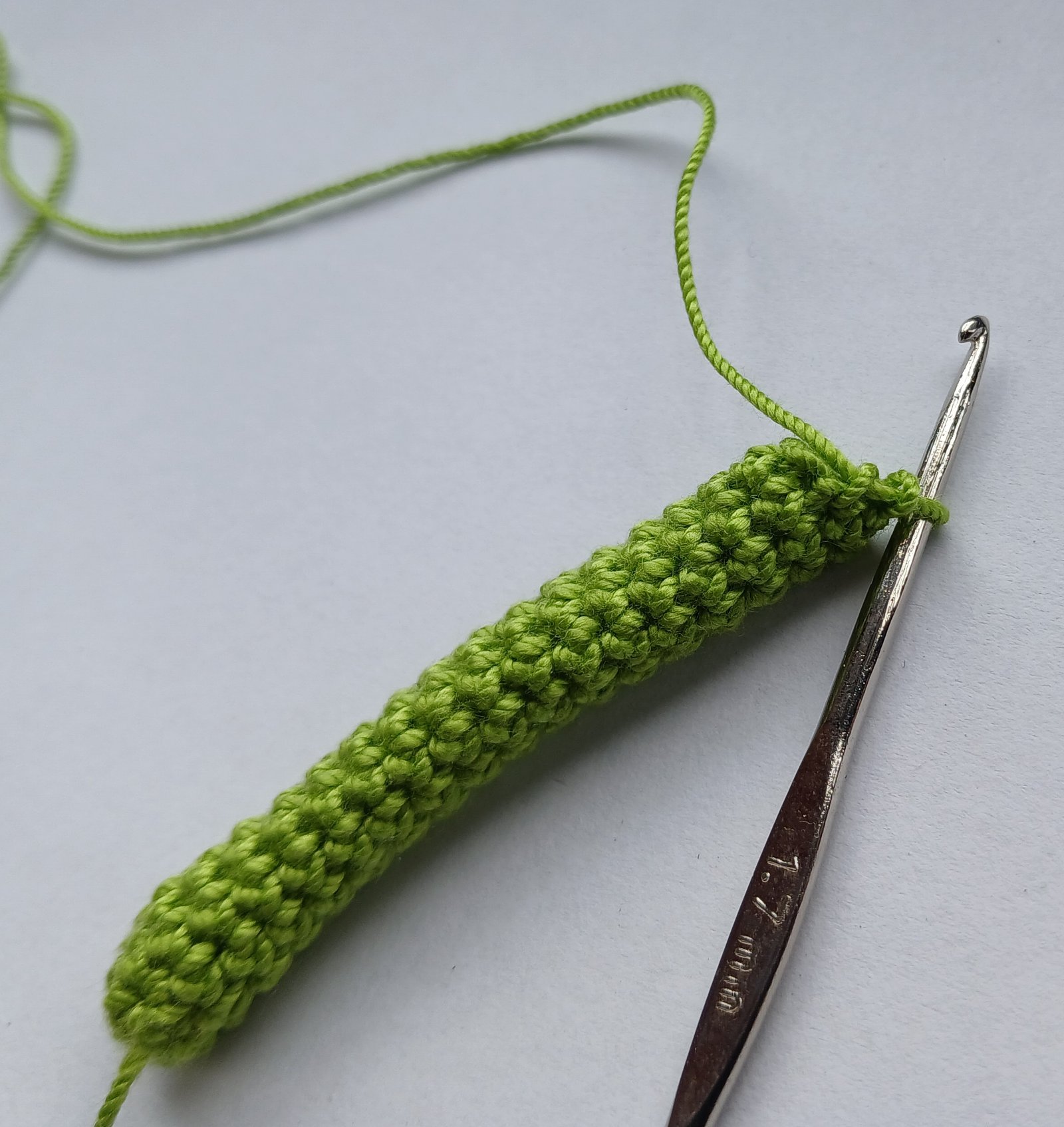
| STEMS | INTRODUCTION The thinnest stem worth making with crochet consists of 6 stitches circumference. Wider stems can be made by simply increasing the number of stitches. Short stems are self supporting, while longer stems may need a length of wire inserted through the centre. |
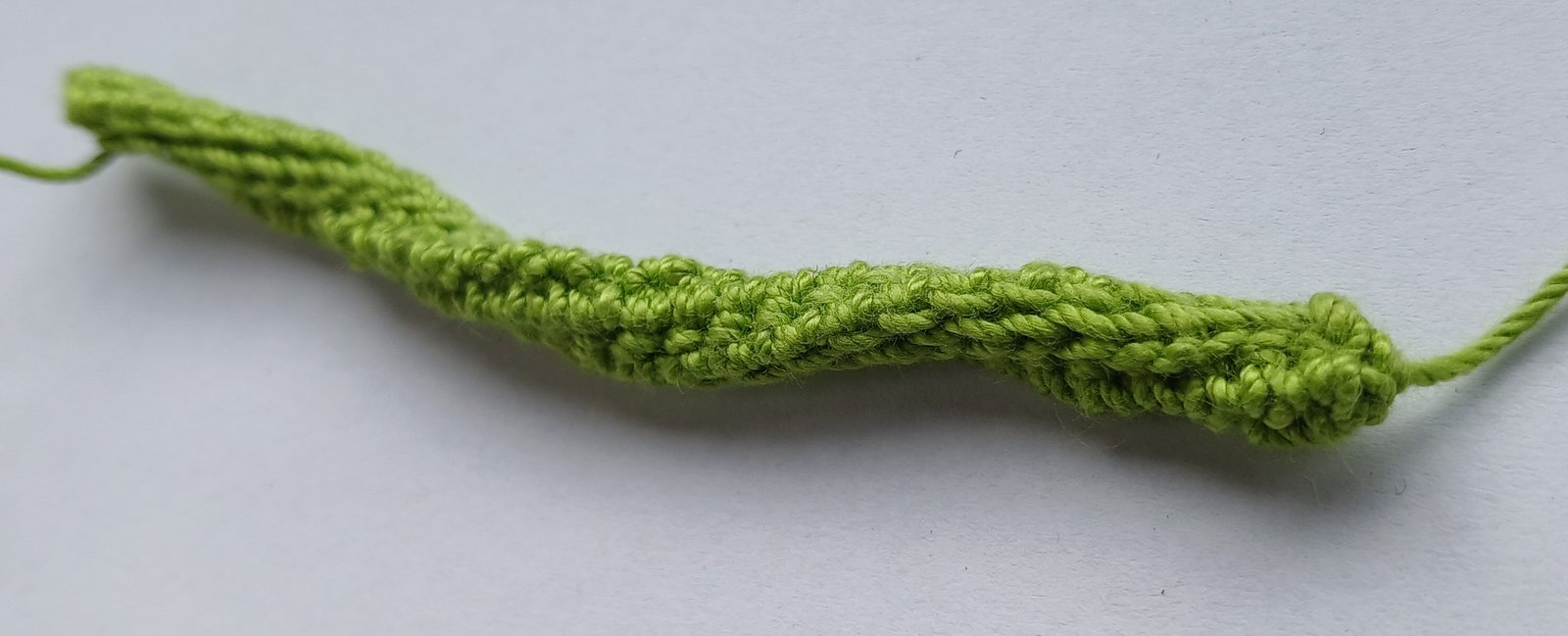
Stem 1 Rnd 1 Make a ring with 6ch, closed with a ss. Ensure the join is NEXT to you at the front. You may need to thread the cast-on tail through the centre of the loop. Rnd 2 Make 6dc into the ring (6st) Continue making Rounds with dc until the work is the required length of the stem. DO NOT cast off until any Sepals have been added. Stem 1 variations and notes. |
|||||
| RECEPTACLES (Flower base) |
INTRODUCTION This is the bulbous part at the base of a flower that connects it to the stem The sepals are connected directly to the receptacle |
Receptacle 1 This produces the thinnest receptacle • Start • A stem made from 6st in the round • Rnd 1 Work (2dc into each st) × 6 (12st) • Rnd 2 (2dc into 1st st, 1dc into next st) × 6 (18st) DO NOT cast off until Sepals have been added. Receptacle 1 variations and notes. |
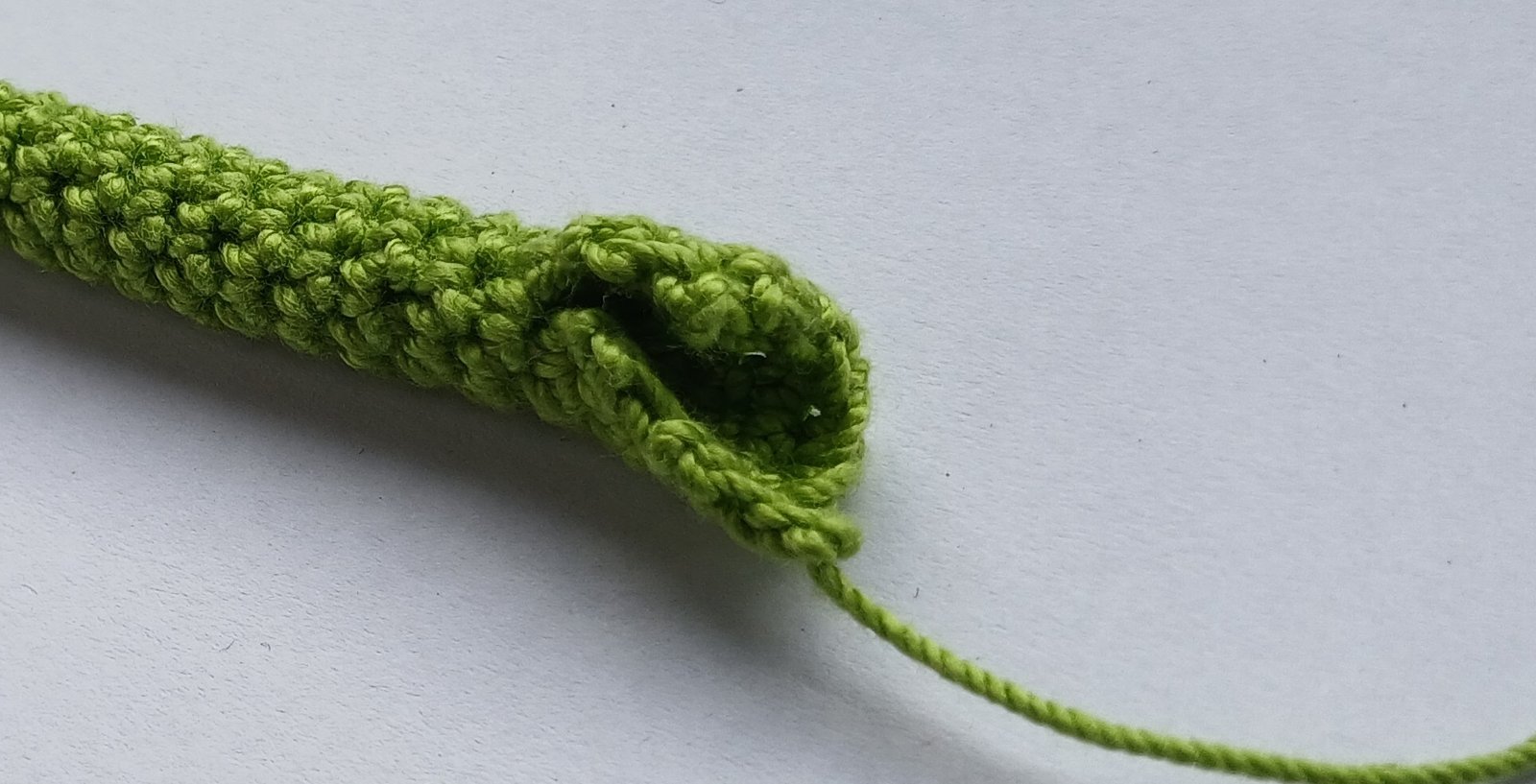
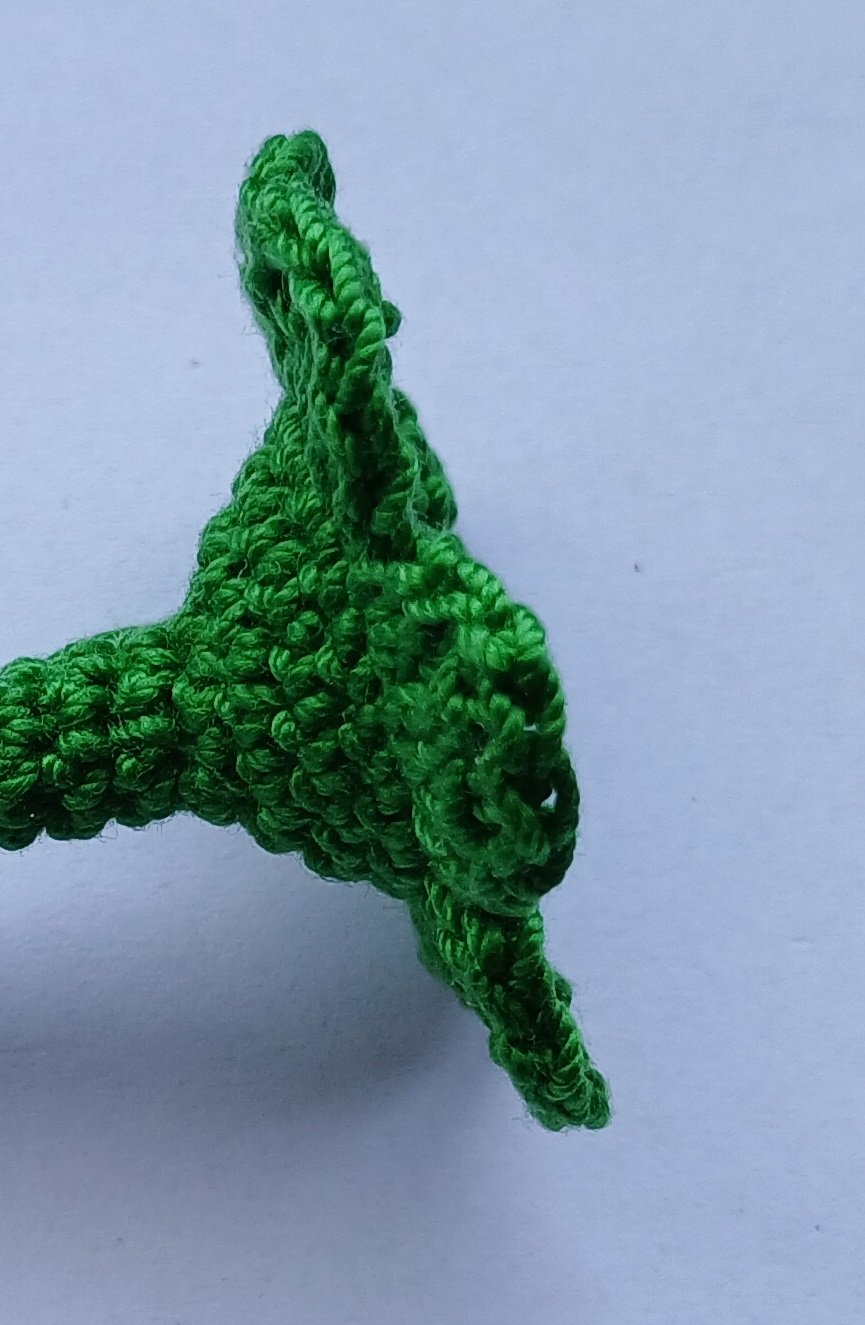
Receptacle 2 - top Receptacle 2 - side • Start • A stem made from 6st in the round • Rnd 1 Work (2dc into each st) × 6 (12st) • Rnd 2 (2dc into 1st st, 1dc into next st) × 6 (18st) • Rnd 3 1dc into each st (18st) • Repeat Rnd3 to give the required depth of receptacle Picture shows 4 rounds of 18 st DO NOT cast off until Sepals have been added. |
||||
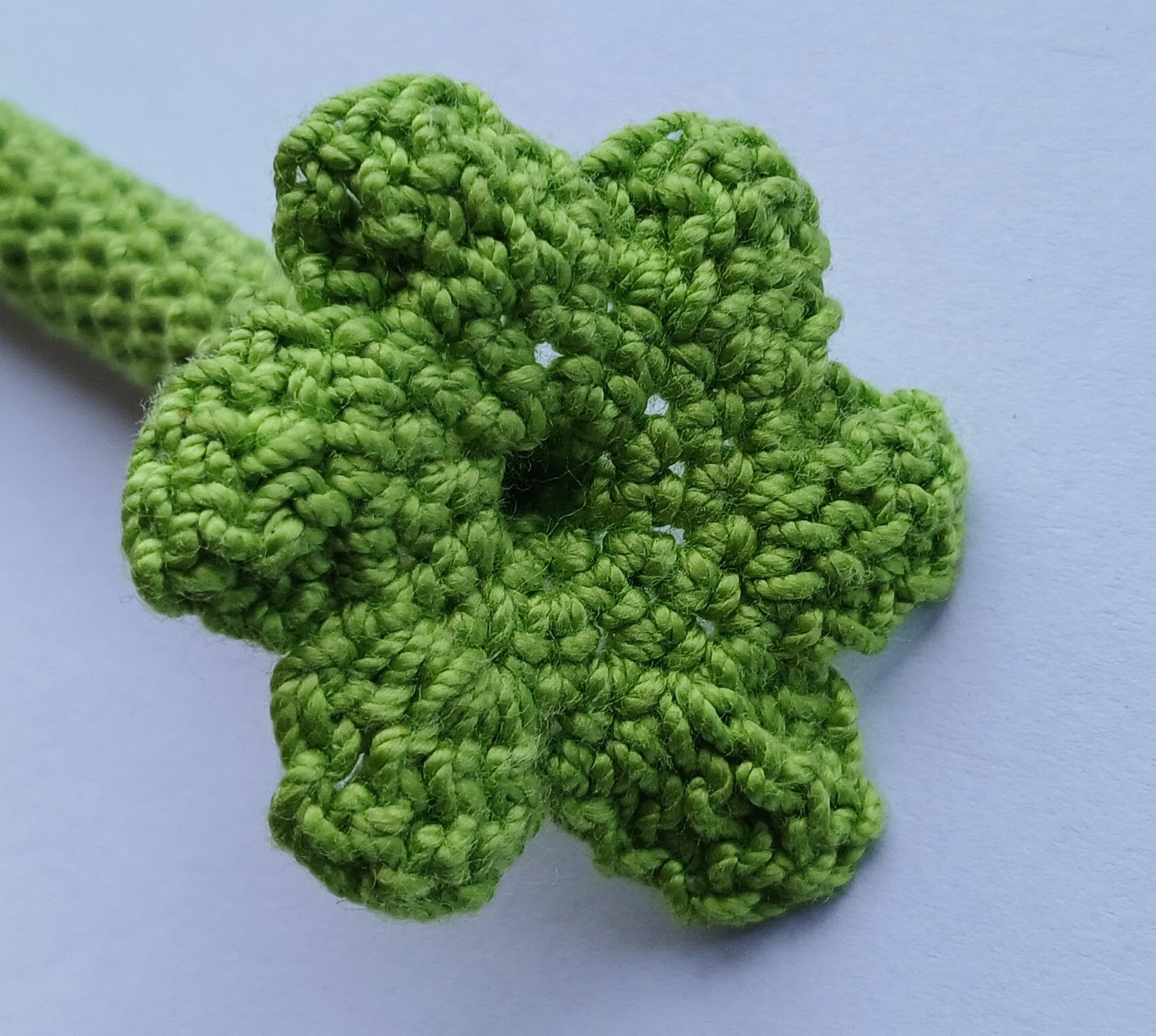
| SEPALS | Sepal 1 - 3st wide • Start A receptacle with a multiple of 3 stitches, e.g. 9, 12, 15, 18 etc stitches • Working in blockes of 3 stitches, 1dc, 1ch,1tr into 1st st, 1ch 2dtr into 2nd st, 1ch 1tr 1ch 1dc into 3rd st Repeat until all of the sepals are around the edge of the receptacle Sepal 1 variations and notes. |
||||||
|
ABBREVIATIONS, STITCHES, ROUTINES The crochet patterns use the English notation Yarn used Anchor Freccia 6 cotton with a 1.7mm crochet hook. |
Abbreviations (ch) = chain stitch (dc) = double crochet (this is equivalent to the American single crochet) (dec) = decrease (inc) = increase (MR) = magic ring (rnd) = round (row) = row (rpt) = repeat (ss) = slip stitch (st) = stitch |
Decrease is made by:- passing the hook into the next stitch and pulling the yarn through which gives two threads on the hook; then passing the hook into the next stitch and pulling the wool through, which gives three threads on the hook; then put the wool over the hook and pull it through all three threads on the hook, leaving just one. |
INCREASE is made by:- making two double crochets into the same stitch |
MAGIC RING is made by:- Make a loop of yarn, with the tail hanging downwards and the working yarn overlapping in front of the tail Holding the loop in place, insert the hook through the centre of the loop and pull the working yarn through the loop. Make 1 chain. Work 'the required number of stitches' dc into loop, ensuring that they go over the tail. Pull tail to close the loop together Join with ss |
TENSION TEST It is useful to know the number of stitches and rows per centimetre when designing flowers so that patterns can be calculated. Ideally, Tension Tests should be as large as possible to minimise measuring errors. The Tension Test below is 20 rows of dcs (60mm) by 20 stitches 53mm. 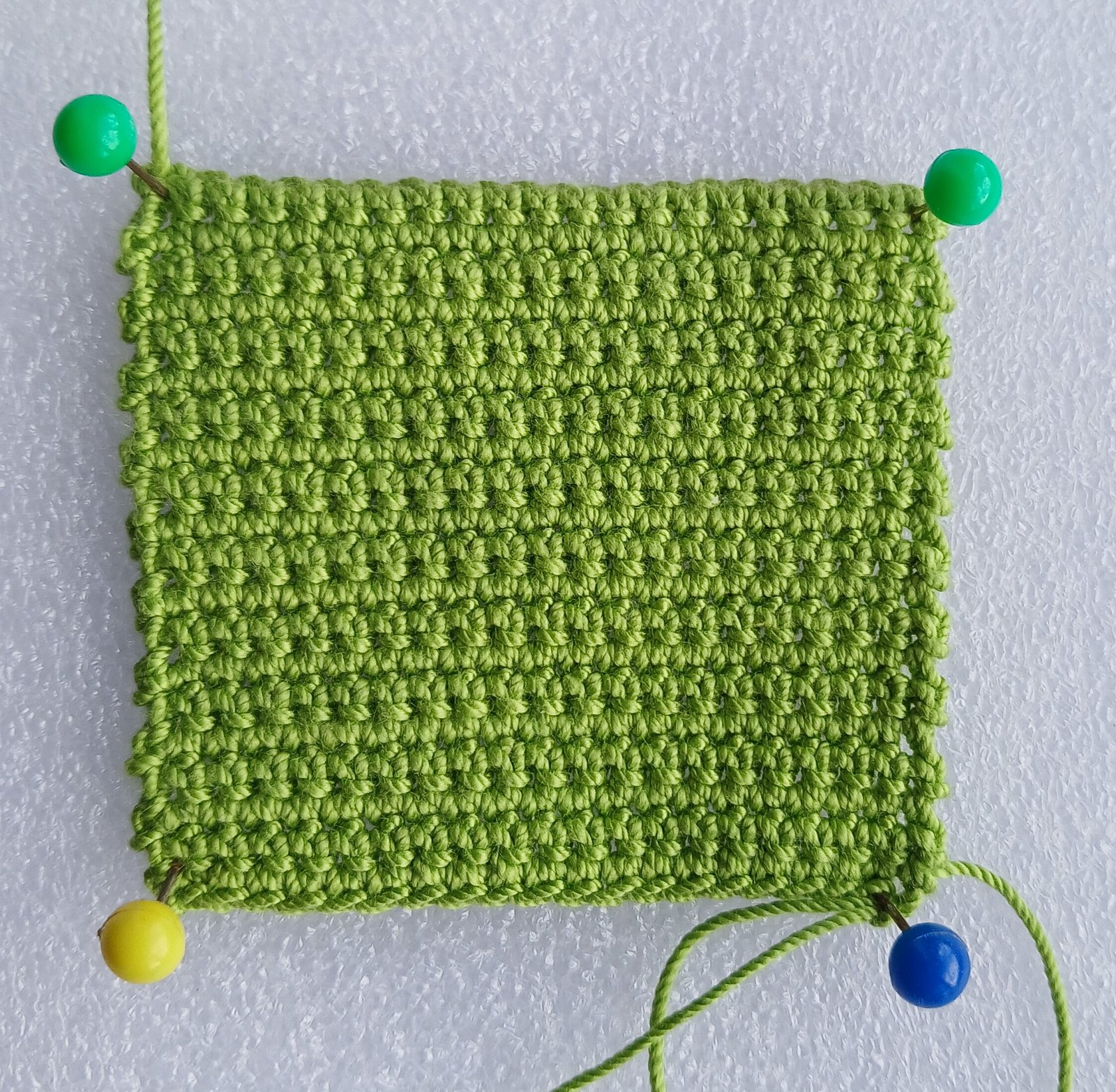 |
||
 12st
12st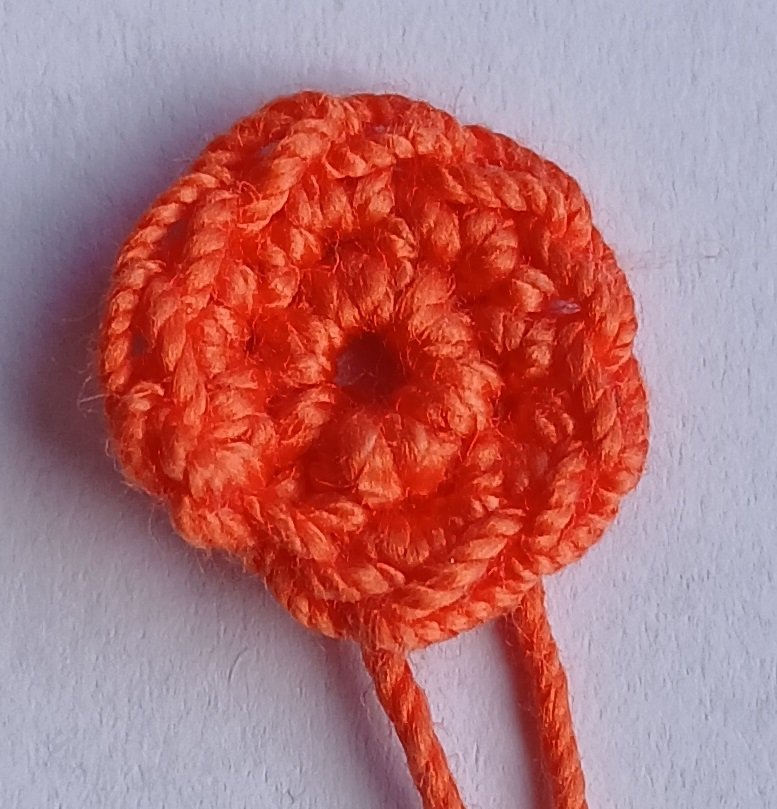 10st
10st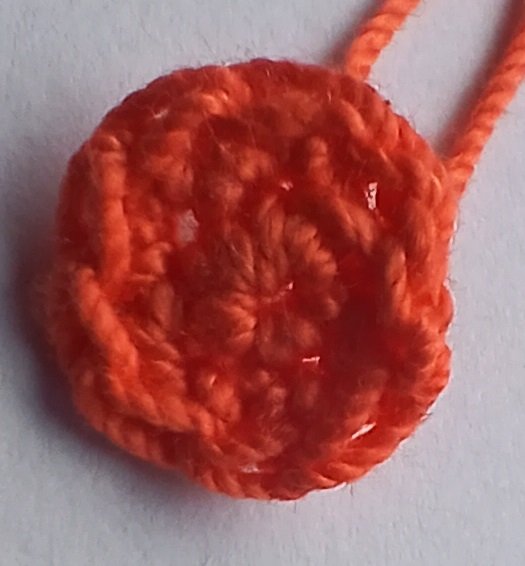 8st
8st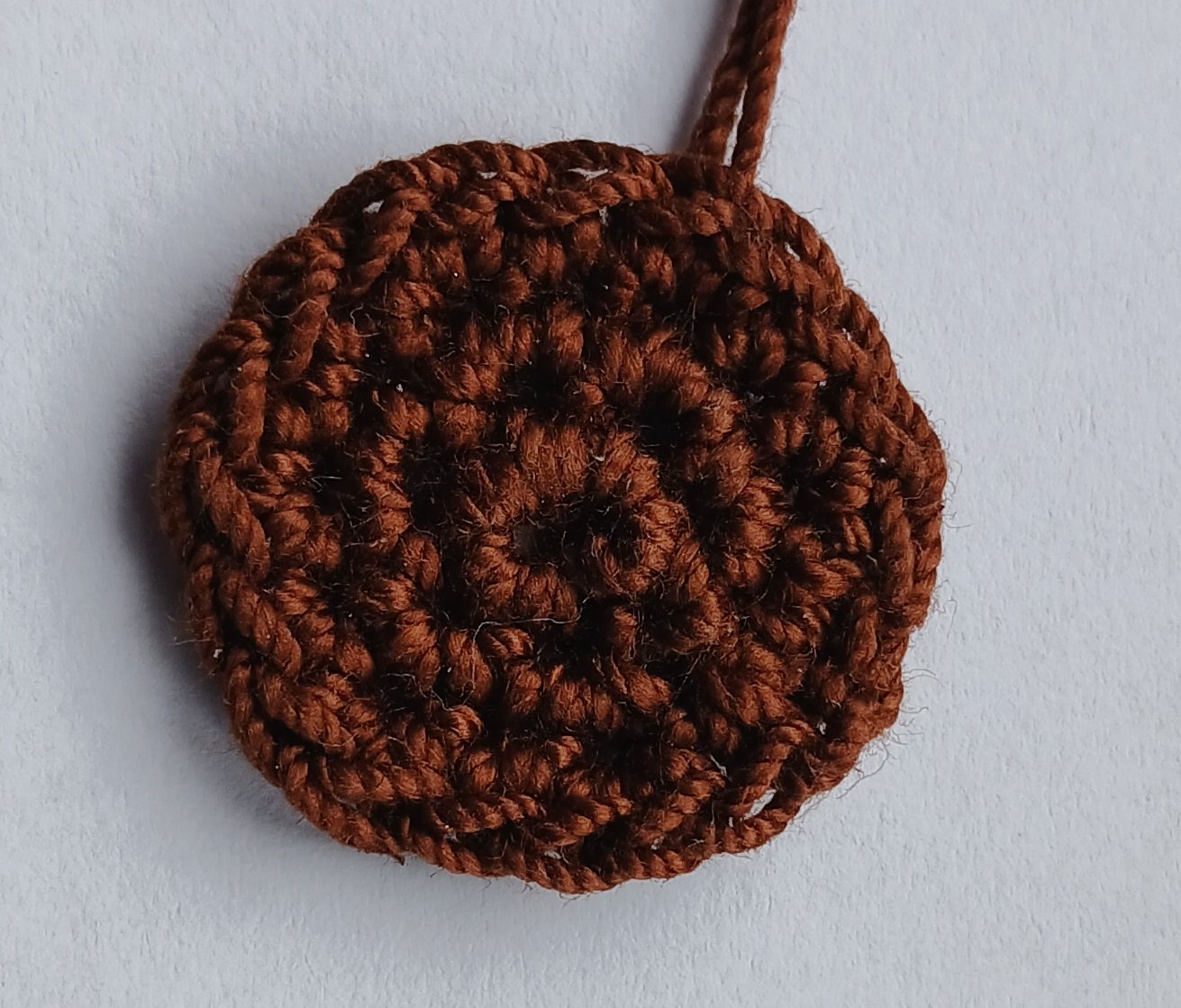 18st
18st